Growth Summit · Nov 7-8 / 32 Early Bird seats left at $299. Then $449.

Podcast studio
THE PODCAST

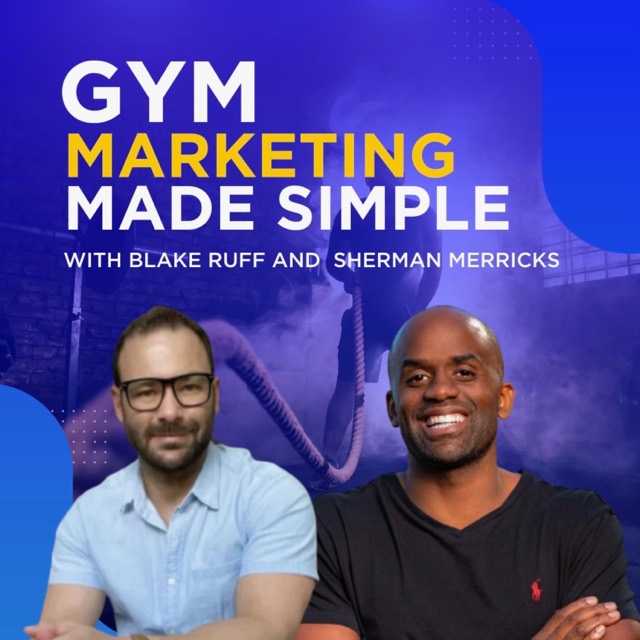
Gym Marketing Made Simple

The #1 podcast for gym owners who want to stop guessing and start growing. 135+ episodes. Hosted by Blake Ruff & Sherman Merricks. New episodes every week.

LATEST EPISODE

EP 138: Why Most Gyms Fail to Convert Leads (and What Successful Ones Do Differently)

Most gym owners love referrals — but what happens when warm leads run out? The real challenge begins when it’s time to win over cold traffic.Welcome to the Gym Marketing Made Simple podcast — built fo...

EPISODE LIBRARY

129+ episodes of actionable gym growth strategy.

EP 1380 min

Why Most Gyms Fail to Convert Leads (and What Successful Ones Do Differently)

Most gym owners love referrals — but what happens when warm leads run out? The real challenge begins when it’s time to win over cold traffic.Welcome to the Gym Marketing Made Simple podcast — built for boutique gym owners who want to consistently attract members and grow revenue without taking on the full-time job of being a marketer.Episode HighlightsThis episode breaks down the reality of marketing and sales in boutique gyms with Josh Martin. The team explores Lasso’s proven system for lead generation, nurturing, and conversion — and why success depends on consistency, follow-up, and mindset. From handling rejection to understanding conversion rates, this conversation is all about following a proven process that works.Key TakeawaysLasso stands for Lead and Sales System Optimization, a structured approach to generating and converting leads.Warm leads often convert easily, but cold traffic requires patience and persistence.A realistic conversion rate from leads to sign-ups is 10–20% — and that’s perfectly normal.Consistent follow-up and long-term nurturing are key to turning cold leads into paying members.The system works best when followed as designed — deviating from it reduces success rates.Having an open mind to change existing methods is essential for growth.The “fortune is in the follow-up” — success comes from consistency, not quick wins.Episode Chapters00:00 Intro00:10 Challenges of Cold Traffic vs. Warm Leads05:26 The Importance of Following the System09:11 Handling Lead Conversion and Rejection12:11 The Role of CRM and Long-Term Nurturing18:17 The Importance of Sales and Follow-Follow-Up19:48 Challenges of Cold Traffic and Emotional Reactions22:02 Common Mistakes and Misconceptions25:12 The Importance of Data and Proven MethodsCall to ActionIf this episode hits home, follow the podcast and share it with a fellow gym owner who’s ready to grow the right way. Consistency builds results — and community.Supporting Information👉 Book a free strategy call: https://www.lassoframework.com/👉 Connect with Josh Martin: The Refined Art of CoachingThanks for tuning in to Gym Marketing Made Simple. Keep showing up, keep following the system, and we’ll catch you in the next episode.

LISTEN NOW
EP 1290 min

How Nicole Aucoin Built an AI‑Powered Nutrition Engine for High‑Level Gyms

Most gyms leave thousands of dollars and countless client results on the table, not because they lack leads, but because they don’t know how to turn nutrition and AI into a real, scalable profit center.Welcome to Gym Marketing Made Simple, the show focused on cutting through the noise around gym growth. Each episode centers on practical marketing, sales, and leadership systems that help boutique gyms build steady momentum without guesswork or constant outreach.Episode Highlights In today’s episode, Sherman and Blake are joined by Josh Martin and Nicole Aucoin to break down how gym owners can build a serious nutrition revenue stream by pairing proven coaching systems with smart AI tools. Nicole explains the new Healthy Steps Nutrition app, lessons learned from building in tech, and how gyms can finally track real nutrition ROI instead of guessing.Episode Outline Nicole’s background, HSN’s evolution, and why all four hosts are now former gym owners.Why Nicole built the Healthy Steps Nutrition app after years on third‑party platforms.What the app actually does for gyms.How AI is used inside the app.Practical AI lessons for gym owners.Client-side AI features coming soon.Coach-side AI features.What HSN training looks like today.The business model of a successful gym nutrition program.Lead nurturing and the biggest follow‑up mistakes gym owners make.Why Lasso + HSN gyms outperform on nutrition revenue and client results.What Nicole will teach at the Lasso Gym Growth Summit in Nashville.Who the Summit is for and what “high level” means in this context.Nicole’s excitement about Nashville, the venue, and possibly moving to the area. Episode Chapters00:00 Intro & Hosts00:30 Meet Nicole Aucoin & Healthy Steps Nutrition01:50 Launching the HSN App & Tech Challenges04:20 Why Build a Custom App for Nutrition Coaching05:50 Features: Habit Coaching, AI Meal Photo Feedback, Lower Ticket Offers08:10 Pricing Strategy & Conjoint Study Results09:35 Training AI with 10+ Years of Dietitian Content10:55 Upgraded HSN Coach Training & Certification14:15 How Gyms Should (and Shouldn’t) Use AI16:20 Client‑Side AI: Personalization, Lessons, Recipes18:10 Coach Dashboards, Data, and Accountability21:50 The Avatar of a Successful HSN Gym24:45 Hiring the Right Nutrition Coaches26:40 Lead Nurturing, Follow‑Up, and Long Buyer Cycles32:55 Lasso Gym Growth Summit & Nicole’s Session37:15 Why Attend and What to Expect in NashvilleAction Taken Nicole officially launches the Healthy Steps Nutrition app with:  Founders' pricing and a future price increase.A structure for gyms to sell it at a lower in‑house rate.HSN tightens standards by tying platform access to active certification and recertification.Lasso announces the Lasso Gym Growth Summit in Nashville (Nov 5–7), with Nicole as a speaker focused on:    - Building and scaling gym nutrition programs    - Using AI and systems to increase client value and retention.Conclusion.Gym owners don’t just need more leads, they need a clear way to turn nutrition and AI into predictable revenue and better client outcomes. By tightening systems, choosing the right people to coach nutrition, and using data and AI to support (not replace) human connection, gyms can serve more members at a higher level and create a real nutrition pillar in their business.CTA  Book a call with Lasso to tighten up your marketing and lead flow.Connect with Healthy Steps Nutrition to build or upgrade your gym’s nutrition program.Grab your spot at the Lasso Gym Growth Summit in Nashville to learn how top gyms are scaling nutrition, sales, and leadership.👉 Book a free strategy call: https://www.lassoframework.com/Thank you for listening and for caring enough about your members to improve how you coach, follow up, and serve them beyond the four walls of your gym. Keep chasing the version of your business that matches the impact you know you can make. 
LISTEN NOW
EP 1280 min

How to Sell Gym Memberships with Confidence by Fixing Your Mindset First

Selling gym memberships doesn’t have to feel pushy when you know deep down that enrolling someone is the first step to changing their life. Welcome to Gym Marketing Made Simple, the show focused on cutting through the noise around gym growth. Each episode centers on practical marketing, sales, and leadership systems that help boutique gyms build steady momentum without guesswork or constant outreach.Episode HighlightsIn today’s episode, Jeff Burlingame breaks down why mindset is the number one factor in gym sales, more important than scripts, lead volume, or offer structure. He walks through simple questions every gym owner and coach must answer before they pick up the phone, and shares a practical mantra that makes sales calls feel more like helping a friend than closing a deal.Episode OutlineWhy mindset makes or breaks gym sales.Four core belief questions:  - Does what you sell work?  - Do you believe in what you sell?  - Do you believe in yourself?  - Will this specifically help your ideal client?Clarifying your ideal client and fit.Reframing sales as helping, not pushing.How mindset impacts call reluctance.Creating a personal sales mantra.Contagious energy in sales.Setting up the next step: structured conversationsEpisode Chapters00:00 Intro & show positioning00:28 Jeff’s background and sales series purpose01:33 Why mindset drives gym sales success02:04 Q1 – Does what you sell actually work?02:56 Q2 – Do you truly believe in what you sell?03:35 Q3 – Do you believe in yourself?04:11 Q4 – Will this help your ideal client?05:00 Defining your ideal client & program fit06:20 Selling as helping when all answers are “yes”07:43 Call reluctance and heavy-phone feeling08:25 “Born salespeople” vs learned mindset09:10 Creating your personal sales mantra10:38 Short mantra: “I’m here to make a friend”12:15 How mindset causes bad sales months12:55 Positivity vs negativity in sales calls13:40 Getting your team’s mindset aligned14:15 Why you need a structured sales conversation nextAction TakenFor owners and coaches:Ask and honestly answer the four belief questions about your service and yourself.  Define your ideal client profile and who your program is best for. Create a personal sales mantra you can repeat before and after calls.Treat each sales interaction as a chance to make a friend and understand someone’s problem.  For your team:Run staff through the same belief questions. Share and align on a shared mindset around selling as helping. Encourage the team to track wins and losses as part of their mantra practice.  ConclusionA strong sales month in your gym starts long before the phone rings. When you’re clear that your service works, you believe in it, you believe in yourself, and you know exactly who it’s for, every sales call turns into a chance to guide someone to their starting line. With a simple mantra to ground you after both wins and losses, you can show up positive, present, and curious—making it easier to pick up the phone, connect with leads, and enroll the right people into your gym.Call to ActionIf you’re ready to stop dreading sales and start closing with confidence, share this episode with your team and start answering the four mindset questions together today. 👉 Book a free strategy call: https://www.lassoframework.com/Thank you for spending your time leveling up your mindset with us. Keep showing up with belief in your service, belief in yourself, and the courage to make one more call, because the right conversation can be the turning point for someone who needs your gym. 

LISTEN NOW
EP 1270 min

Structured Sales Conversations for Gyms: How to Turn Intros into New Members

Stop giving gym tours and hoping people sign up. Start running sales conversations that almost naturally lead to “Yes.” Welcome to Gym Marketing Made Simple, the show focused on cutting through the noise around gym growth. Each episode centers on practical marketing, sales, and leadership systems that help boutique gyms build steady momentum without guesswork or constant outreach.Episode HighlightsIn today’s episode, Jeff Burlingame breaks down a simple, repeatable “structured conversation” that turns random gym introductions into intentional sales appointments, creating momentum, revealing real goals, and helping prospects decide to start now. Episode OutlineWhy every gym needs a point A–to–point B sales framework, not a loose chat or casual tour  The concept of “momentum of agreement” and why prospects should be saying “yes” all along the way .Ideal appointment length (30–45 minutes) and why too short or too long costs you sales  How to build rapport through questions, active listening, and using the prospect’s name with intention  The power of being the person who asks the most questions in any interaction  What SMART goals really look like in a gym setting and why “I want to get stronger” isn’t enough  How to dig for at least two to three SMART goals with clear, specific follow-up questions  Desire and urgency as the two non‑negotiables behind every sale  Why “budget” is often a defense mechanism—and how true desire makes people find a way  Using future pacing to paint the “joy state” once goals are achieved  Exploring the “pain state”: what happens if nothing changes and goals are never hit  Tying joy and pain together to unlock emotional drive and help prospects commit  Episode Chapters00:00 Intro and show setup00:29 Why every gym needs a structured sales conversation02:10 Moving from casual gym tours to intentional sales frameworks03:30 Building rapport: blind date mindset and appointment length05:15 Active listening, asking better questions, and using names07:00 SMART goals: going deeper than “I want to get stronger”08:30 Why desire and urgency drive every sale (budgets as defense)10:15 Unlocking desire with future pacing and “joy state”12:30 Exploring the “pain state” if nothing changesAction TakenCreate a documented structured conversation framework for gym intro or no-sweat appointments that:  Moves prospects from first hello to clear yes/noTargets a 30–45 minute average appointment lengthBuilds momentum of agreement throughout  Build a rapport-training checklist for staff that focuses on:  Asking the most questions in the roomPracticing active listeningUsing names frequently and naturallyRelying on open-ended follow-ups (“Tell me more about that…”)Add a requirement to collect at least three SMART goals from every prospect and script the exact questions to get themDesign question prompts to unlock desire and urgency, including:  Future pacing (joy state): What life looks and feels like when goals are achievedPain state: What it costs them if nothing changes  ConclusionA predictable gym sales engine starts with a clear, structured conversation. When you stop giving casual tours and start leading prospects through a framework that builds rapport, clarifies SMART goals, and ties those goals to both joy and pain, the decision to join becomes much easier. With the right questions and flow, you’re not pushing people—you’re guiding them to a confident “yes” at the true beginning of their fitness journey with you.CTAReady to turn your intro appointments into reliable sales conversations?👉 Book a free strategy call: https://www.lassoframework.com/to get the words, questions, and frameworks that help your gym sign more of the right members. Thank you for listening to Gym Marketing Made Simple. Keep building conversations that actually matter, ask better questions, and watch more people choose to start their journey with you. 

LISTEN NOW
EP 1260 min

How Paid Marketing Drives Predictable Growth for Boutique Gyms

Struggling to grow beyond 100 members? Most boutique gyms hit a ceiling in revenue and membership, but there’s a solution that goes beyond referrals and organic marketing.Welcome to Gym Marketing Made Simple, the show focused on cutting through the noise around gym growth. Each episode centers on practical marketing, sales, and leadership systems that help boutique gyms build steady momentum without guesswork or constant outreach.Episode HighlightsIn today’s episode, Blake Ruff breaks down the real reason most boutique gyms stall out around 100–150 members and why “better systems” alone won’t fix it. He explains how to use paid marketing, strong offers, and a frictionless funnel to create consistent lead flow, beat churn, and turn your gym growth into a predictable process instead of a monthly guessing game.Episode OutlineThe hidden reality of gym ownership: long hours, tight margins, and member churn canceling out new sign-ups  Why relying on organic marketing, referrals, and “just get better systems” keeps gyms stuck at 100–150 members  How big franchises open with hundreds of members by paying for attention, not waiting to be discovered  Why owning a gym is such an easy entry business—and why that makes your local market brutally competitive  The core problem: a lack of consistent, predictable lead flow rather than a lack of effort or coaching quality  Building a basic marketing funnel: from ad to lead, from lead to appointment, from appointment to paying member  Crafting a strong, valuable offer that clearly communicates why someone should act now  Removing friction in your funnel so joining feels as easy and familiar as buying on Amazon  Lead nurture that works: fast follow-up, human connection, and why calls still matter  The power of speed-to-lead and what it means for your close rate  Using math instead of emotion: understanding CAC and forecasting growth from your ad spend  Why depending on referrals and “good months” is a dangerous way to run your gym  Turning marketing into a repeatable process you can scale to dominate your local area  Episode Chapters00:00 Intro – Welcome to Gym Marketing Made Simple00:28 The Reality of Being a Gym Owner01:25 Hitting the 100–150 Member Ceiling02:10 Why Organic Marketing Isn’t Enough03:05 Competing With Franchises That “Pay for Attention”03:52 Building a Simple, Frictionless Marketing Funnel04:40 Lead Nurture and Speed-to-Lead05:23 Using Data and CAC to Make Predictable Decisions06:20 The Danger of Relying on Referrals Alone07:15 Choosing Predictable Growth Over Guesswork08:10 Invitation to Book a Call With Lasso08:44 Outro and Final MessageAction TakenInvite listeners to book a free call with Lasso to audit their current marketing and lead flow  Direct listeners to lassoFramework.com to learn more about done-for-you paid marketing for gyms  Encourage gym owners to shift from referral dependence to data-driven paid acquisition  Challenge listeners to measure and track their customer acquisition cost (CAC) before scaling spendConclusionPaid marketing provides boutique gyms with predictable lead flow, higher conversion rates, and a clear path to growth. By implementing a strong offer, a frictionless funnel, and fast follow-up, gym owners can take control of revenue and scale confidently.CTABook your free strategy call and see what it would take to build a predictable, paid marketing system for your gym.👉 Book a free strategy call: https://www.lassoframework.com/Thank you for spending your time with Gym Marketing Made Simple. You’re doing the hard work of leading a gym, and you deserve growth that matches your effort. Keep pushing, keep learning, and keep building a business that supports the life you want, not the other way around.

LISTEN NOW
EP 1250 min

Facebook Ads Strategy for Boutique Gyms: Budget, Targeting, and Scaling

Stop killing your gym ads after a bad week. Learn how to read your numbers, ride out slow seasons, and let Facebook’s algorithm actually work for you—so your best campaigns can finally scale instead of getting shut off too soon. Welcome to Gym Marketing Made Simple, the show focused on cutting through the noise around gym growth. Each episode centers on practical marketing, sales, and leadership systems that help boutique gyms build steady momentum without guesswork or constant outreach.Episode Highlights In today’s episode, Blake breaks down how to structure, fund, and optimize Facebook ad campaigns for boutique gyms so you stop guessing, stop restarting the learning phase, and start making decisions based on real conversion data, especially when seasons, holidays, and human behavior get in the way. Episode Outline Why simple ad structures (1–2 campaigns, 2–4 ad sets) outperform overbuilt accounts  How budget controls Facebook’s learning phase and how long to let ads run  The rule of spending 2–4x client value before killing a campaign  Why $1,000–$1,500/month is a realistic baseline for local gym ads  Reading results in 14-day windows—and when to zoom out to 30 days  How spring break, holidays, weather, and school schedules skew performance Why cost per lead is not the only (or best) metric to judge campaigns  Keeping “expensive” ads that close high-quality members  When to leave a winning campaign alone and launch a fresh test campaign  Smart ways to expand your audience: age, targeting, radius, and ideal size - How to think about rural markets vs. urban markets  Dialing in creative to the age groups that are actually opting in  The “gold standard” funnel metrics from lead to close  Fixing your sales and funnel before blaming “bad” leads  Using frequency to decide when an ad is truly worn out  Episode Chapters00:00 Intro & Podcast Purpose00:30 Why Simple Ad Structures Work Best01:20 Budgets, Learning Phase, and When to Turn Ads Off03:12 Reading Results in 14- and 30-Day Windows04:20 Human Behavior, Seasons, and “Slow” Weeks05:40 Judging Campaigns by Cost per Lead vs. Closed Clients07:43 Expanding Targeting: Age, Interests, and Audience Size09:10 Urban vs. Rural Targeting and Radius Expansion10:10 Dialing Creative to the Ages That Opt In11:10 Funnel Metrics: Lead to Consult, Show, and Close Rates12:26 Frequency, Ad Fatigue, and When to Kill a Creative13:28 Final Recommendations and Call to ActionAction Taken Run 1–2 core campaigns with 2–4 ad sets optimized for leads.  Set a consistent monthly ad budget in the $1,000–$1,500 range where possible.  Review campaign performance in 14-day windows; use 30 days around major events.  Keep high-quality, higher-cost campaigns live and test cheaper leads in separate campaigns.  Expand age ranges, relax tight targeting, and widen radius by 1–3 miles to grow audience size.  Track conversion rates through the full funnel before touching winning ads.  Monitor frequency and shut off creatives that are over 10+ views and no longer producing.  Conclusion This episode shows that winning gym marketing is less about hacking Facebook and more about respecting data, time frames, and human behavior. When you keep your structure simple, fund your campaigns properly, and judge success by closed clients instead of just cheap leads, you give Facebook enough room to find your best prospects and give your gym a dependable growth engine instead of a reset button every few weeks. CTA If you’re ready to stop guessing with your ads and want a clear plan for your gym, book a free call with the Lasso team and dial in a campaign that can actually scale. 👉 Book a free strategy call: https://www.lassoframework.com/Thank you for tuning in to Gym Marketing Made Simple. Your commitment to understanding the numbers behind your ads is what turns short-term spikes into steady, dependable member growth.

LISTEN NOW
EP 1240 min

Gym Lead Follow Up System That Increases Conversions

Most gyms don’t have a lead problem; they have a follow-up problem. The winners aren’t the ones with the best ads; they’re the ones who refuse to give up on a lead after day seven.Episode Highlights In today’s episode, Sherman breaks down a simple but aggressive follow-up system that turns “unresponsive” leads into paying members. He explains why old-school lead behavior is gone, what DND really means, how to use phone, email, and automation together, and why a proper CRM is now non‑negotiable for boutique gyms that want reliable growth.Episode Outline Why leads felt easier to close in 2009–2010 vs. today  How tech, ads, and more options changed buyer behavior  What DND actually signals (and why you shouldn’t quit)  Multi-channel follow-up: text, phone, and email working together  The ideal follow-up cadence: first 15 minutes, 24/48/72 hours, up to ~10 calls  Moving cold leads into long‑term nurture and following up “forever”  Case study: $30k MRR launch from ~$30k in ad spend  Why every gym must use a CRM (not Google Sheets)  Building pipelines for cancellations, no‑shows, and unclosed leads  Speaking differently to each lead type based on their journey  Story: a prospect who came back 18 months later and finally joined  The difference between being persistent vs. being pushy  How to balance automation with manual touch points  Lead volume math: 300 leads, 10–20% conversion, and realistic growth  Episode Chapters00:00 Intro & episode setup00:29 Why follow-up is harder today02:10 Handling DND and multichannel outreach03:40 Phone call follow-up cadence05:20 Paid ads & $30k MRR grand opening case study07:10 CRM systems and lead pipelines09:00 Persistence vs pushiness in follow-up10:09 Nurturing cold paid leads long term12:20 Automation vs manual touchpoints13:50 Lead conversion math & closing thoughtsAction Taken Build and use a real CRM with clear pipelines for:  Cancellations  No‑shows  Leads who visited but did not close  Implement a follow-up cadence:  First phone call within 15 minutes Then at 24, 48, and 72 hours Continue up to ~10–11 calls Shift to weekly, then monthly long‑term nurture Keep email and call follow-up active even if SMS is marked DND Set up automation for value‑add emails and long‑term nurture Assign a dedicated person or team to own lead follow-up daily Conclusion  This episode shows that consistent, structured follow-up is the real differentiator in today’s crowded fitness market. With the right cadence, a solid CRM, and a mindset of persistence without pushiness, cold or “unresponsive” leads can become steady membership growth instead of wasted ad spend.CTA  Book a call with the Lasso Marketing team to install a proven follow-up and CRM system for your gym so you can convert more of the leads you’re already paying for.👉 Book a free strategy call: https://www.lassoframework.com/Thank you for listening to Gym Marketing Made Simple. Keep showing up for your leads with the same consistency you expect from your best members—your future revenue depends on it.

LISTEN NOW
EP 1230 min

Why Gym Ads Fail and How to Create High-Converting Fitness Marketing

Most gym ads don’t fail because of bad offers. They fail because no one stops scrolling long enough to see them.Welcome to Gym Marketing Made Simple, the show focused on cutting through the noise around gym growth. Each episode centers on practical marketing, sales, and leadership systems that help boutique gyms build steady momentum without guesswork or constant outreach.Episode HighlightsIn today’s episode, Blake Ruff breaks down what actually makes gym ads work, starting with the visuals that stop attention and carry the message. The focus is on creating content that looks professional but still feels approachable, using vertical formats that fit how people consume content.It also walks through why consistency across ads, social pages, and websites matters, and how a mismatch can quietly lose potential leads. The conversation covers how to use organic content as a testing ground before putting money behind ads, along with a clear approach to testing creatives without overcomplicating the process.Episode OutlineWhy visuals matter more than text in gym advertisingHow to create videos that look professional without feeling intimidatingThe importance of 9:16 format and keeping text in a safe zoneUsing strong hooks in the first five seconds to stop scrollingBuilding a consistent and premium look across all platformsHow mismatched branding leads to drop-offUsing organic content to identify what performs before running adsChoosing images and videos that reflect the ideal clientUsing simple text overlays to support the messageTesting multiple creatives with the same copy for clearer resultsWhy changing too many variables slows down ad performanceEpisode Chapters00:00 Intro00:29 Why Visuals Make People Stop Scrolling01:30 Professional and Inviting: Nailing the Gym Aesthetic02:40 Video Specs: 9:16 Format and Safe Zone Basics03:30 Using Hooks in the First 5 Seconds of Your Video04:30 Premium Branding: Matching Your Prices with Your Look05:40 Using Organic Content to Test What Works06:40 Showing the Right People: Ideal Client & Body Types08:00 Avoiding Intimidating Imagery (CrossFit, High-Skill Movements)08:50 Text Overlays that Quickly Tell Your Story09:45 Keep It Simple: Clear Message, Clear Call to Action10:23 Smart Testing: Up to 10 Creatives with One Winning Copy11:20 Snow Globe Analogy: Don’t Shake Up Too Many VariablesAction TakenCreate vertical (9:16) videos with a clear safe zone for textProduce 3–5 hook variations for each videoAudit social media and website for consistent brandingUse top organic posts as the base for paid adsCapture visuals that match the target audience and experienceTest multiple creatives using one proven copyKeep changes minimal when optimizing campaignsConclusionStrong ads come down to clarity and consistency. When visuals, messaging, and branding all align, it becomes easier for the right people to connect with what the gym offers. Simplifying the testing process also makes it easier to see what actually works without wasting time or budget.CTABook a free call using the Lasso Framework to learn how creating and testing high-performing ad creatives can boost member sign-ups, improve marketing consistency, and reduce wasted ad spend👉 Book a free strategy call: https://www.lassoframework.com/Thank you for listening. Keep showing up with intention and clarity in how things are presented. Small details shape how people respond.

LISTEN NOW
EP 1220 min

Audience Setup and Advanced Targeting for Gym Marketing

Most gym ads fail for one simple reason. The system sending leads was never set up to filter the right people in the first place.Welcome to Gym Marketing Made Simple, the show focused on cutting through the noise around gym growth. Each episode centers on practical marketing, sales, and leadership systems that help boutique gyms build steady momentum without guesswork or constant outreach.Episode HighlightsIn today’s episode, Blake Ruff discusses a new Facebook Ads Manager feature that allows campaigns to target users who prefer submitting a lead form on Facebook or visiting a website. SMS verification helps improve lead quality on Facebook lead forms, while proper Meta pixel installation ensures website conversions are tracked correctly. Using both options allows gyms to capture leads from different user behaviors and compare results through campaign data.Episode OutlineOverview of the new Facebook Ads Manager feature, allowing website or instant form lead deliveryHow Facebook determines whether a user is sent to a website or a lead formAdvantages of Facebook instant lead formsImportance of SMS verification for improving lead qualityWhen websites generate higher quality leadsThe role of the Meta pixel in tracking website conversionsUsing Facebook Pixel Helper to confirm the pixel is firing correctlySetting campaign budgets versus ad set budgets in Ads ManagerHow to configure and customize lead forms inside FacebookRequired lead form fields and privacy policy requirementsConnecting Facebook leads to a CRM for follow-upThe benefit of running website traffic and lead forms togetherUsing campaign data to compare results from both lead sourcesEpisode Chapters00:00 Intro & Podcast Overview00:29 New Facebook Ads Feature: Website + Instant Forms01:20 Pros & Cons of Lead Forms vs Websites02:15 SMS Verification for Higher-Quality Leads03:05 Website Optimization & Pixel Setup04:24 Building High-Intent Lead Forms05:20 Combining Website Traffic & Instant Forms06:40 Using Data to Optimize Campaigns07:30 Recap & Call to ActionAction TakenEnable SMS verification on Facebook lead forms to confirm phone numbers and improve lead qualityInstall the Meta/Facebook pixel on the websiteEnsure the lead conversion pixel fires when a form is submittedDownload and run the Meta Pixel Helper to verify tracking eventsCreate or duplicate a lead form with higher-intent settingsAdd fields for first name, last name, email, and phone numberInclude privacy policy and a clear call-to-action to schedule a free trialConnect Facebook lead form submissions to the CRM systemSelect the correct website pixel and set the conversion event to “Lead” in Ads ManagerConfigure campaigns using the website plus instant forms optionOptimize the website using a clear problem-solution message and fewer distractionsRun campaigns and compare lead performance from website traffic and instant formsConclusionThe new Ads Manager feature allows gyms to capture leads in two ways without choosing one platform over the other. Facebook directs users to the experience they are most likely to complete, while campaign data reveals which path produces stronger results. With SMS verification, proper pixel tracking, and a clear website message, both lead sources can support stronger ad performance.CTABook a free call using the Lasso framework to see how a structured marketing system can increase member sign-ups.👉 Book a free strategy call: https://www.lassoframework.com/Thank you for listening. Strong marketing systems create predictable leads, and the right setup makes every ad work harder.

LISTEN NOW
EP 1210 min

The Right Way to Use Facebook Lead Forms and Landing Pages

More leads do not always mean better leads.The way prospects submit information can change the quality of every inquiry. One setting inside Facebook Ads Manager can quietly shift the outcome.Welcome to Gym Marketing Made Simple, the show focused on cutting through the noise around gym growth. Each episode centers on practical marketing, sales, and leadership systems that help boutique gyms build steady momentum without guesswork or constant outreach.Episode HighlightsIn this episode, Blake Ruff breaks down the new Facebook Ads Manager option that allows campaigns to run with both website traffic and instant lead forms. Lead forms keep users on Facebook and can improve lead quality when SMS verification is enabled. Landing pages can produce stronger leads but require a clear, optimized website and a properly installed Facebook pixel for tracking. Using both options together allows advertisers to capture leads directly on Facebook while still sending qualified prospects to a websiteEpisode OutlineHow Facebook lead forms work and why they keep data inside FacebookThe role of SMS verification in improving lead qualityWhen sending traffic to a website can produce stronger leadsWhy is a properly installed Facebook pixel required for tracking conversionsHow to verify the pixel using the Facebook Pixel HelperSetting up higher-intent Facebook lead forms with required fields and privacy policyConnecting lead forms to a CRM for follow-up and nurturingRunning campaigns that allow users to choose between website visits and instant formsWhy website optimization matters before sending paid trafficEpisode Chapters00:00 Intro & Podcast Overview00:30 New Facebook Ads Feature: Website + Instant Forms01:10 Lead Forms Pros, Cons & SMS Verification02:15 Sending Traffic to Website vs Lead Forms03:10 Pixel Setup & Meta Pixel Helper04:15 Building a High-Intent Lead Form05:20 Using Website + Instant Forms Together06:30 Optimizing Website & Final Recommendations07:30 Closing & Call to ActionAction TakenTurn on SMS verification for Facebook lead forms to confirm submitted phone numbers and improve lead qualityInstall the Meta/Facebook pixel on the website and verify it using the Meta Pixel HelperEnsure the lead conversion pixel fires when a form is submittedCreate a Facebook lead form using higher-intent settings and required fields (name, email, phone)Include a privacy policy and clear CTA such as scheduling a free trialConnect the Facebook lead form to the CRM so leads enter the nurturing pipelineSelect the correct pixel and conversion event (“Lead”) when configuring Ads Manager campaignsReview and optimize the website before sending paid trafficConclusionLead forms and landing pages serve different roles inside Facebook advertising. Lead forms create a fast and simple path for prospects to submit their information, while landing pages allow deeper engagement for visitors who prefer to explore a website first. The strongest campaigns often use both. When supported by a properly installed pixel and a clear website experience, this combination improves lead tracking, lead quality, and overall campaign performance.CTAListen to the episode to understand how the website and instant forms feature works and how it can be applied inside Facebook Ads Manager.👉 Book a free strategy call: https://www.lassoframework.com/Thank you for listening. Thank you for listening. Enjoy putting these strategies into action and see what works best for your campaigns.

LISTEN NOW
EP 1200 min

How X4 Nexus Achieves 60% Show Rates Across Multiple Gyms

Are most gym leads slipping through the cracks without ever showing up? Find out what separates high-performing gyms from the rest.Episode HighlightsIn this episode, Whitney from X4 Nexus explains how her gyms achieve a 75% booking rate, 60% show rate, and under 5% churn. She dives into creating scalable processes across multiple locations, building a passionate team, nurturing leads over 14 days with a structured follow-up cadence, and maximizing member value ($1,500–$1,800 per year). Whitney also shares insights on maintaining lead quality, refining marketing targeting, and ensuring consistent operational execution.Episode OutlineWhitney’s role: managing four locations with plans for expansionDaily and weekly operational tasks for consistency across studiosLead nurture: 14-day manual follow-up with six calls plus monthly automated outreachBooking and show rate strategies, including urgency and confirmationsClosing rates and maximizing member valueChurn management and retention strategiesAdvice for gym owners: monitor lead quality, refine marketing, improve nurtureKey takeaways: know your numbers, refine systems, balance people coaching with operational metricsEpisode Chapters00:00 Intro to Gym Marketing Made Simple & Lasso00:29 Meet Whitney & X4 operations overview01:59 Managing multiple gym locations & staffing03:23 Hiring from the brand community & “product of the product”04:29 Franchising X4 & building scalable systems06:07 Lessons from OrangeTheory & “you can’t improve what you don’t measure”08:07 Lead journey design & 14-day nurture cadence11:29 Booking, urgency & show-rate tactics17:13 Free trial, presenting offers & sales process19:25 Funnel math: leads to 15–20% conversions22:54 LTV, CAC and ad spend mindset25:24 Churn, retention & business health vs hobby32:08 People vs process, refining what already works36:31 Final advice to gym owners & GMsAction TakenCreate scalable operational processes for franchise expansionBuild a sales team and implement a structured lead nurture processContact new leads within five minutes and follow up manually for 14 daysMove leads into monthly automated sequences after manual follow-upsImplement confirmation automation and manual confirmation cadenceRefine marketing targeting, monitor KPIs, adjust processes as neededConclusionStructured operations, intentional staffing, and focused lead nurture keep gyms performing at peak efficiency and member engagement high.CTAListen, follow, and visit the provided links to access the tools and insights shared in this episode.👉 Book a free strategy call: https://www.lassoframework.com/Thank you for listening! Use Whitney’s insights to take control of your gym operations, lead with intention, and create processes that empower both your team and your members.

LISTEN NOW
EP 1190 min

Debunking Facebook Ads Misconceptions for Gyms: Why Marketing Strategies Need to Be Tailored to Your Gym's Growth Stage

Most gyms waste marketing dollars without seeing results. Small budgets and unclear strategies are often the reason. Knowing where to focus makes all the difference.Welcome to Gym Marketing Made Simple, the show focused on cutting through the noise around gym growth. Each episode centers on practical marketing, sales, and leadership systems that help boutique gyms build steady momentum without guesswork or constant outreach.Episode HighlightsIn this episode, Tommy and Blake break down common misconceptions in gym marketing. They explain how budget, campaign setup, and understanding metrics like LTV and CAC directly impact results. We explore strategies for small and large ad budgets, simplifying campaigns to maximize lead quality, and preparing for future Facebook strategies.Episode OutlineMisconceptions about client expectations and marketing resultsUnderstanding the fitness marketplace and client needsBudget limitations and strategic allocation for small Facebook ad budgetsFacebook’s auction-based system and its impact on ad performanceDifferences between service-based and product-based business marketingBuilding awareness and retargeting strategies for gymsOptimizing lead quality and conversion rates with custom audiences and website formsFuture Facebook strategies, including instant forms and integration with platforms like ChatGPTLong-term marketing strategy considerations and adapting to changing conditionsEpisode Chapters00:00 Unrealistic goals & ROAS expectations00:22 Intro – Gym Marketing Made Simple podcast00:48 Episode setup & ad spend context03:25 Why Lasso tests at scale & still owns a gym05:30 Who should run paid ads & budget tiers (750–1k)08:16 Keeping campaigns simple on small budgets10:13 Auction system & why $25/day limits you14:32 Awareness vs lead campaigns explained19:01 Product vs service & the 30‑day ROAS trap23:13 LTV, CAC & long‑game math for gyms36:06 Ideal full‑funnel Meta strategy with big budgets45:06 Improving lead quality (SMS verify, audiences)51:24 Awareness levels: unaware to most aware55:33 Spend more vs fix funnel metrics58:41 Other awareness channels beyond Meta1:01:20 Future of ads: instant forms & ChatGPT1:03:16 Who should (and shouldn’t) run FB adsAction TakenTest ads on both website and Facebook lead forms simultaneously; track website conversions to evaluate halo effect and lead qualityAttend a three-hour Meta instant forms and CRM integration presentation to improve lead attributionRevamp campaign structures: fewer campaigns, creatives targeted to specific awareness stages (unaware → most aware)Add LTV and LTV:CAC benchmark metrics to the Gym Builder dashboard for better CAC and scaling decisionsConclusionRealistic expectations and clear strategies are key to successful gym marketing. Understanding budget limitations, optimizing campaigns, and tracking the right metrics ensures marketing dollars are used effectively. Staying informed about new strategies positions gyms to adapt and grow long-term.CTAListen, follow, and visit the provided links to access the tools and insights shared in this episode.👉 Book a free strategy call: https://www.lassoframework.com/Thank you for listening. Remember, the right strategy and understanding of metrics can turn limited budgets into measurable results.

LISTEN NOW
...

Tired of guessing? Let's diagnose the bottleneck.

BOOK A GROWTH CONSULT

Want the playbooks we talk about on the show?

Enter your email to get "The 5 KPIs Every Gym Owner Must Track to Break Through Their Revenue Ceiling" — our free cheat sheet for predictable growth.

Want more than podcast episodes? Install the system.

Book a free growth consult and we'll diagnose the bottleneck holding your gym back.